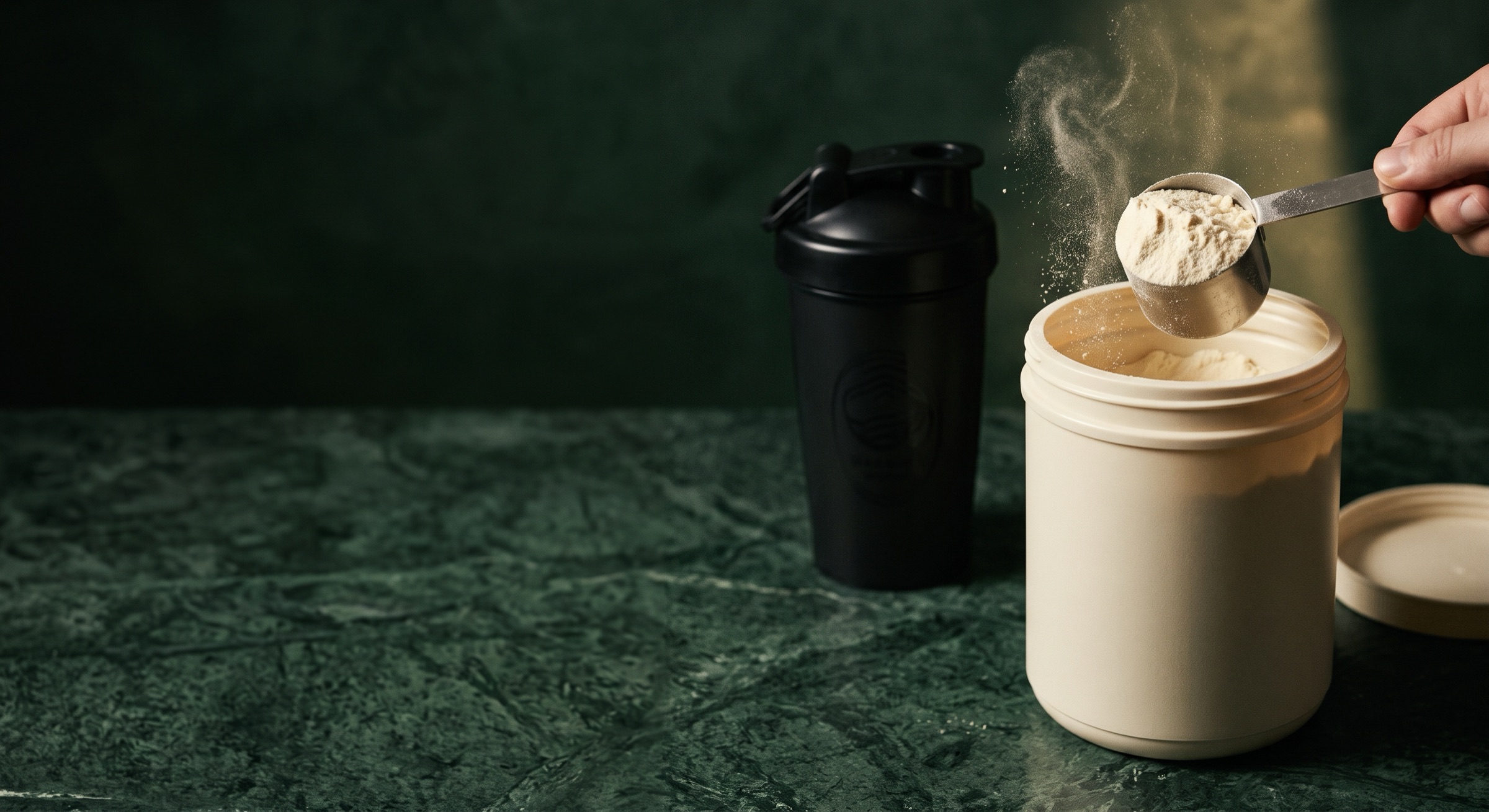
20 to 30 g per serving, from whey
Whey isolate or concentrate from European dairies, with a complete amino acid profile and a Certificate of Analysis for every batch. Declared on the pack as protein per serving and per 100 g.
Weight-loss drugs have turned protein into one of the fastest-moving categories in nutrition, and pushed whey to record prices. Here is what the numbers say, what a product for people who eat less should look like, and what EU rules allow on the label.
GLP-1 medicines make people eat less, so every bite has to carry more protein. That has driven record demand for whey: European WPC80 is still about 80% above last year even after falling in October 2026. A good product for this market is a small, light serving with 20 to 30 g of high-quality protein, little sugar and good tolerance, made from traceable European whey. In the EU, the label can say “high protein” and use the authorised protein claims, but not “GLP-1 friendly” or anything that refers to the medicine.
In the US, 11% of adults now take a GLP-1 medicine for weight loss, up from 3% in 2024 (Gallup, 2026). Circana finds that 65% of shoppers on these drugs are looking for more protein (Food Dive, September 2026).
In Europe, uptake is still around 2% (ING via FoodNavigator, March 2026), but access is opening up. The EU approved oral Wegovy in July 2026, German pharmacies have sold it since 1 September, and France has reimbursed injectable treatment for severe obesity since June.
Protein demand did not wait. German grocery and drugstore sales of protein powder grew from €113 million to €327 million in two years, and the number of buying households doubled to 5.1 million (NielsenIQ, July 2026). Not all of that is GLP-1, but the direction is the same: people want more protein in less food.
The market tracker Vesper named GLP-1 use “the main driving force behind the demand growth” for whey as early as December 2025. In March 2026, European WPC80 traded above €20,000 per tonne and most EU producers were sold out. On 7 October 2026, Vesper reported WPC80 down 18.5% on the month but still 81.8% above a year earlier, while milk protein concentrate kept rising (Vesper, October 2026).
The large producers are investing for the long term. Europe's biggest whey processors are adding capacity and expect whey protein demand to grow by around 10% a year once GLP-1 users are counted (DairyReporter, February 2026). Ingredient makers are also developing ready-made concepts for this market, such as small protein shots and drinking yogurts with 20 g of protein or more per serving.
For brands, that means one thing: secure 2027 protein early, from a source you can trace, and keep a plan B grade in the specification.
This section is background for formulation, not a claim for any product. In the large STEP 1 trial, about 38% of the weight lost was lean mass (Mozaffarian et al., Obesity 2025). That is why clinical guidance puts protein first.
For a product developer, the takeaway is simple: 20 to 30 g of protein in a serving that a small appetite can finish.
Most launches in this space are a standard shake with a new sticker. These are the points that separate a product people keep buying from one they try once.
Whey isolate or concentrate from European dairies, with a complete amino acid profile and a Certificate of Analysis for every batch. Declared on the pack as protein per serving and per 100 g.
Single-serve sachets, half scoops or 200 ml drinks instead of 40 g shakes. Clear whey works well here: light, juice-like and easy to drink between meals.
Around 90 to 150 kcal per serving, so the “high protein” claim (at least 20% of energy from protein) is met with room to spare.
Low sugar, few sugar alcohols, low lactose with isolate, still rather than carbonated, and fibre where it suits the format.
Named origin, a written specification and a second approved grade, so a price spike does not stop your production.
Allowed: “source of protein” (at least 12% of energy from protein) and “high protein” (at least 20%) under Regulation (EC) 1924/2006, and the authorised claims of Regulation (EU) 432/2012: “Protein contributes to a growth in muscle mass”, “to the maintenance of muscle mass” and “to the maintenance of normal bones”.
Not allowed: “GLP-1 friendly”, “for Ozempic users” or any wording that links the food to a medicine or a disease. The consumer centre of North Rhine-Westphalia calls supplement advertising that refers to GLP-1 generally inadmissible (Verbraucherzentrale NRW), and the UK advertising regulator ruled in May 2026 that even a product name playing on GLP-1 was an unauthorised claim. The US “GLP-1 friendly” badges do not travel to Europe.
We check every label text against these rules before printing. See the EU launch guide for the full process.
Nordic Life Systems sources WPC80, WPI90 and clear whey isolate directly from leading European dairies, among them some of the largest whey protein producers in Europe. Every batch comes with its specification and a Certificate of Analysis, and the country of production is on every document.
For brands, we develop and produce high-protein powders, clear whey and single-serve sachets under your label from 500 units per SKU, either in Germany for a “Made in Germany” label or in Bulgaria where “Made in the EU” is enough. From brief to first production usually takes 8 to 10 weeks.
Bulk whey ships from one pallet. See whey protein grades, private-label sports nutrition and contract manufacturing.
No. Referring to a medicine or to a disease is treated as a disease claim or an unauthorised health claim. Use nutrition facts and the authorised protein claims instead.
Most products in this space deliver 20 to 30 g per serving, in line with the European guidance of 20 to 30 g per meal. The final amount depends on the format and the calories you want per serving.
WPC80 for classic shakes at a lower cost, WPI90 when you want very little fat, sugar and lactose, and clear whey isolate for light, juice-style drinks. We often specify a second grade as a fallback.
Nobody can promise that. In October 2026 WPC80 was falling month on month but still far above last year, while isolates held firm. We quote in writing with a validity date and help you plan volumes early.
500 units per SKU for protein powders and clear whey, and one pallet for bulk whey. First orders are paid in advance.
Send a few lines about your product: format, market, rough volume. Minimum orders: 500 units per SKU for sports nutrition, 60,000 capsules or 300,000 stick sachets for probiotics, bulk probiotic cultures from 50 kg. You get an answer within 24 hours.
Meet us at Fi Europe, Messe Frankfurt, 17–19 November 2026. Book a meeting at the show →